30. 다음 글의 밑줄 친 부분 중, 문맥상 낱말의 쓰임이 적절하지 않은 것은?
The principal transportation mode in the developing world, even in large cities, is still walking because of constraints on the resources needed to operate extensive transit systems. People cover ① long distances on foot every day and expend human energy that they can hardly spare. Walking under those conditions is an unavoidable burden that ② consumes productive capability. In North America and Western Europe, however, the attitude and policies are just the ③ same: walking is efficient, healthful, and natural. We should do ④ more of it — almost everybody agrees — and some of the current trends should be reversed. Ironically, among the most popular exercise machines in health clubs and in homes are treadmills that simulate walking, which could be otherwise ⑤ accomplished with a transport purpose on the street.
* constraint: 제약 ** transit: 운송
3. same - opposite
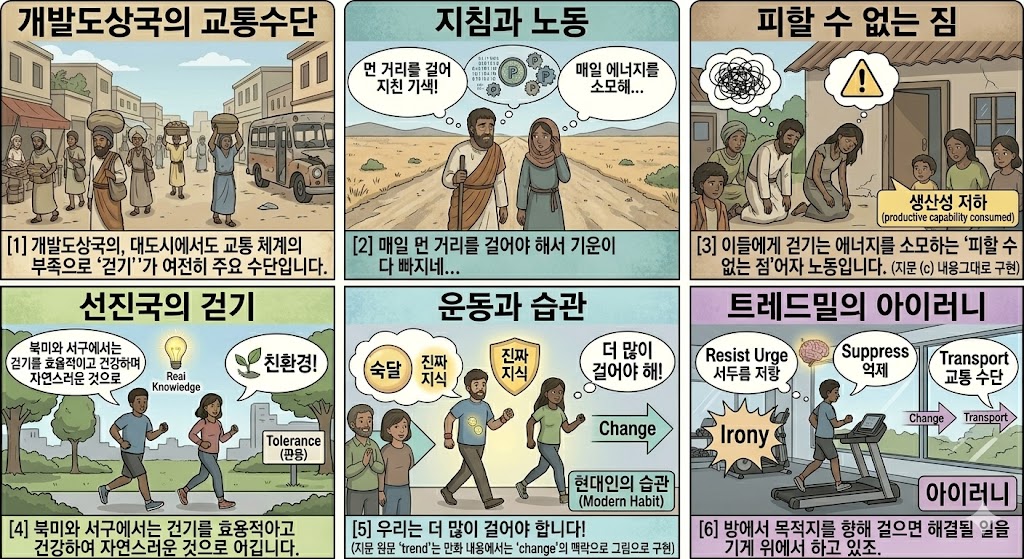
[1] The principal transportation mode in the developing world, even in large cities, is still walking because of constraints on the resources needed to operate extensive transit systems.
[2] People cover long distances on foot every day and expend human energy that they can hardly spare.
[3] Walking under those conditions is an unavoidable burden that consumes productive capability.
[4] In North America and Western Europe, however, the attitude and policies are just the opposite: walking is efficient, healthful, and natural.
[5] We should do more of it — almost everybody agrees — and some of the current trends should be reversed.
[6] Ironically, among the most popular exercise machines in health clubs and in homes are treadmills that simulate walking, which could be otherwise accomplished with a transport purpose on the street.
[내용 연결 & 핵심 키워드 통합 정리]
1단계: 개발도상국의 생존을 위한 걷기 (Walking as a Burden)
**개발도상국(developing world)**에서는 대중교통 시스템을 운영할 자원의 제약(constraints on resources) 때문에 **걷기(walking)**가 여전히 주요 교통수단입니다. 이때의 걷기는 아껴야 할 **인적 에너지(human energy)**를 소모하며, 생산적 능력을 갉아먹는 **피할 수 없는 짐(unavoidable burden)**과 같습니다.
2단계: 선진국의 건강을 위한 걷기 (Walking as a Benefit)
반면, 북미와 서유럽에서는 정반대의 태도를 보입니다. 걷기를 **효율적이고 건강하며 자연스러운 것(efficient, healthful, and natural)**으로 보며, 오히려 더 많이 걸어야 한다고 권장합니다. 부족한 활동량을 채우기 위해 기존의 생활 방식을 역전시키려 노력합니다.
3단계: 현대 사회의 아이러니 (The Irony of Treadmills)
여기서 흥미로운 **역설(irony)**이 발생합니다. 선진국 사람들은 거리에서 이동 목적으로 걸을 수 있음에도 불구하고, 헬스장이나 집에서 걷기를 흉내 내는(simulate) 기계인 트레드밀(treadmills) 위에서 에너지를 소비하며 운동합니다. 실질적인 이동 수단이 아닌 '운동'으로만 걷기를 소비하는 현대인의 모습을 꼬집습니다.
쉽게 암기하는 "공식“
- (개도국) Resource constraints → Walking = Unavoidable Burden 😫
- (선진국) Health perspective → Walking = Efficient & Healthful 😊
- (역설) Simulate walking on Treadmills vs. Transport on the street 🏃♂️🔄
주제·제목·요약
주제 (Topic)
The contrasting perspectives on walking between developing and developed countries
개발도상국과 선진국 사이의 걷기에 대한 대조적인 관점
제목 (Title)
The Paradox of Walking: From Survival Burden to Voluntary Exercise
걷기의 역설: 생존을 위한 짐에서 자발적인 운동으로
요약 (Summary)
While people in developing countries walk out of necessity as a burdensome task, those in developed nations view walking as a healthy choice, ironically using treadmills to simulate the activity they could do for transportation.
개발도상국 사람들이 생존을 위한 고된 짐으로서 걷는 반면, 선진국 사람들은 걷기를 건강한 선택으로 여기며, 역설적이게도 이동 수단으로 할 수 있는 활동을 흉내 내기 위해 트레드밀을 사용한다.
"누구는 살려고(Transport) 밖에서 억지로 걷는데, 누구는 밖에서 안 걷고 실내 기계 위에서 걷는 척(Simulate)하며 땀을 빼는 이 상황이 진짜 웃프지(Irony) 않니?
'unavoidable burden'**과 **'healthful exercise'**라는 걷기의 두 가지 사회적 위치
💡 팁: 마지막 문장의 **"ironically"**와 **"simulate"**라는 단어에 주목하세요. 길거리에서 이동 수단으로 충분히 할 수 있는 일을 굳이 기계 위에서 '재현'한다는 점이 이 글이 전달하고자 하는 핵심 비판 지점입니다.
🚶 걷기에 대한 지역별 시각 차이와 현대의 아이러니
개발도상국에서의 생존을 위한 걷기
[1] The principal transportation mode (주요한 교통수단은) / in the developing world (개발도상국에서), / even in large cities (심지어 대도시에서도), / is still walking (여전히 걷기이다) / because of constraints on the resources (자원의 제약 때문에) / needed to operate extensive transit systems (광범위한 대중교통 체계를 운영하는 데 필요한).
개발도상국에서는 심지어 대도시에서도 광범위한 대중교통 체계를 운영하는 데 필요한 자원의 제약 때문에 주요 교통수단은 여전히 걷기이다.
- needed: '필요한' (앞의 resources를 수식하는 과거분사구)
- transit system: 대중교통 체계
- 친구 단어 (의미 단위):
- principal transportation mode: 주요 교통수단
- developing world: 개발도상국
- constraints on the resources: 자원의 제약/제한
- extensive transit systems: 광범위한 대중교통 체계
- 표현 포인트: * [수치 수식] needed to operate가 앞의 resources를 수식하는 과거분사구라는 점을 짚어주세요.
- [전치사] because of 뒤에는 명사구(constraints)가 온다는 것을 확인시켜 주세요.
피할 수 없는 노동으로서의 걷기
[2] People cover long distances on foot every day (사람들은 매일 도보로 먼 거리를 이동한다) / and expend human energy (그리고 인간의 에너지를 소비한다) / that they can hardly spare OX (그들이 거의 아껴 쓸 수 없는).
사람들은 매일 도보로 긴 거리를 이동하며, 거의 아껴 쓸 수 없는 인간의 에너지를 소비한다.
- 친구 단어 (의미 단위):
- cover long distances: 먼 거리를 가다/주파하다
- on foot: 도보로 (=by walking)
- expend human energy: 인간의 에너지를 소모하다
- can hardly spare: 거의 할애할(아껴 쓸) 수 없다
- 표현 포인트: * [부정어] hardly는 '거의 ~않다'라는 자체 부정의 의미이므로 not과 함께 쓰지 않는다는 것이 핵심입니다.
[3] Walking under those conditions (그러한 조건 하에서의 걷기는) / is an unavoidable burden (피할 수 없는 부담이다) / that SX consumes productive capability (생산적인 능력을 소모하는).
그러한 조건 하에서의 걷기는 생산적인 능력을 소모하는 피할 수 없는 부담이다.
- on foot: 도보로
- expend: (에너지, 시간 등을) 소비하다/쓰다
- that (2번 문장): energy를 수식하는 목적격 관계대명사
- that (3번 문장): burden을 수식하는 주격 관계대명사
- 친구 단어 (의미 단위):
- under those conditions: 그러한 조건 하에서
- unavoidable burden: 피할 수 없는 짐/부담
- consumes productive capability: 생산 능력을 소모하다
- 표현 포인트: * [수 일치] 동명사 주어 Walking은 단수 취급하므로 동사 is가 쓰였습니다. 아이들에게 "주어-동사 친구"를 찾게 해주세요.
선진국에서의 긍정적인 걷기 인식
[4] In North America and Western Europe, however, (하지만 북미와 서유럽에서) / the attitude and policies are just the opposite (태도와 정책은 정반대이다): / walking is efficient, healthful, and natural (걷기는 효율적이고, 건강에 좋으며, 자연스럽다).
하지만 북미와 서유럽에서 태도와 정책은 그 정반대이다. 즉, 걷기는 효율적이고 건강에 좋으며 자연스러운 것이다.
- 친구 단어 (의미 단위):
- attitude and policies: 태도와 정책
- just the opposite: 정반대인
- efficient, healthful, and natural: 효율적이고, 건강에 좋고, 자연스러운
- 표현 포인트: * [연결어] however를 기준으로 글의 흐름이 '고난'에서 '혜택'으로 반전됩니다. 순서 삽입 문제로 나오기 좋은 문장입니다.
[5] We should do more of it (우리는 더 많이 걸어야 한다) / — almost everybody agrees — (거의 모든 이가 동의하듯이) / and some of the current trends should be reversed (그리고 현재의 추세 중 일부는 뒤집혀야 한다).
거의 모든 사람이 동의하듯이 우리는 더 많이 걸어야 하며, 현재의 추세 중 일부는 바뀌어야 한다.
- 친구 단어 (의미 단위):
- almost everybody agrees: 거의 모든 사람이 동의하다
- current trends: 현재의 추세/경향
- should be reversed: 뒤집혀야 한다/역전되어야 한다
- 표현 포인트: * [조동사 수동태] should be p.p. 형태를 통해 '마땅히 되어야 한다'는 당위성을 나타냅니다.
- the current trends 이 의미하는 것은
현대 사회의 아이러니: 트레드밀
[6] Ironically (아이러니하게도), / among the most popular exercise machines (가장 인기 있는 운동 기구들 중에는) / in health clubs and in homes (헬스클럽과 가정에서) / are treadmills that simulate walking (걷기를 흉내 내는 트레드밀이 있다), / which SX could be otherwise accomplished (그렇지 않으면 성취될 수도 있었을) / with a transport purpose on the street (거리에서 교통의 목적으로).
아이러니하게도, 헬스클럽과 가정에서 가장 인기 있는 운동 기구 중에는 걷기를 흉내 내는 트레드밀이 있는데, 그것(걷기)은 그렇지 않았다면 거리에서 교통의 목적으로 수행될 수도 있었을 것이다.
- are (동사) + treadmills (주어): 장소 부사구가 문두로 나와 주어와 동사가 도치된 구조
- simulate: 흉내 내다, 모의 실험하다
- which: 앞의 walking을 부연 설명하는 관계대명사의 계속적 용법
- 친구 단어 (의미 단위):
- among the most popular: 가장 인기 있는 것들 중에
- simulate walking: 걷기를 흉내 내다/모의 실험하다
- otherwise accomplished: 그렇지 않으면 성취될/이뤄질
- otherwise가 가리키는 것은:
- 영어: without using treadmills (또는 without using exercise machines)
- 우리말: 러닝머신(운동 기구)을 이용하지 않고 (또는 헬스장이나 집에서 기구를 이용하는 것과는 다른 방식으로)
- transport purpose: 운송 목적/이동 목적
- 표현 포인트: * [강조 도치] among으로 시작하는 부사구가 문두에 나와 주어(treadmills)와 동사(are)가 도치되었습니다. 서술형 영작 0순위 문장입니다!
- [관계대명사] , which는 앞의 treadmills를 보충 설명하는 계속적 용법입니다.
지문의 요지: 개발도상국에서는 자원 부족으로 인해 걷기가 생산성을 갉아먹는 고된 '노동'인 반면, 선진국에서는 걷기를 권장하며 심지어 돈을 들여 실내에서 트레드밀로 걷는 아이러니한 상황이 발생하고 있습니다.
1. 다음 글의 빈칸에 들어갈 말로 가장 적절한 것은?
The principal transportation mode in the developing world, even in large cities, is still walking because of constraints on the resources needed to operate extensive transit systems. People cover long distances on foot every day and expend human energy that they can hardly spare. Walking under those conditions is _________________________________________. In North America and Western Europe, however, the attitude and policies are just the opposite: walking is efficient, healthful, and natural. We should do more of it — almost everybody agrees — and some of the current trends should be reversed. Ironically, among the most popular exercise machines in health clubs and in homes are treadmills that simulate walking, which could be otherwise accomplished with a transport purpose on the street.
① a highly efficient way to build physical strength
② a voluntary activity to improve their health conditions
③ an unavoidable burden that consumes productive capability
④ an environmentally friendly alternative to public transit
⑤ an entertaining method to explore their surroundings
2. 글의 흐름으로 보아, 주어진 문장이 들어가기에 가장 적절한 곳은?
[주어진 문장] In North America and Western Europe, however, the attitude and policies are just the opposite: walking is efficient, healthful, and natural.
The principal transportation mode in the developing world, even in large cities, is still walking because of constraints on the resources needed to operate extensive transit systems. ( ① ) People cover long distances on foot every day and expend human energy that they can hardly spare. ( ② ) Walking under those conditions is an unavoidable burden that consumes productive capability. ( ③ ) We should do more of it — almost everybody agrees — and some of the current trends should be reversed. ( ④ ) Ironically, among the most popular exercise machines in health clubs and in homes are treadmills that simulate walking. ( ⑤ ) This could be otherwise accomplished with a transport purpose on the street.
3. 다음 글의 밑줄 친 부분 중, 문맥상 낱말의 쓰임이 적절하지 않은 것은?
The principal transportation mode in the developing world, even in large cities, is still walking because of ①constraints on the resources needed to operate extensive transit systems. People cover long distances on foot every day and expend human energy that they can hardly ②spare. Walking under those conditions is an ③optional burden that consumes productive capability. In North America and Western Europe, however, the attitude and policies are just the ④opposite: walking is efficient, healthful, and natural. We should do more of it — almost everybody agrees — and some of the current trends should be reversed. Ironically, among the most popular exercise machines in health clubs and in homes are treadmills that ⑤simulate walking, which could be otherwise accomplished with a transport purpose on the street.
💡 [정답 및 출제 포인트 분석]
[문제 1번 정답] ③ an unavoidable burden that consumes productive capability
- 출제 의도: 개발도상국 사람들에게 '걷기'가 어떤 의미인지(생존을 위한 고역)를 정확히 파악하고 있는지를 묻는 빈칸 추론입니다.
- 오답 분석: ①, ②, ④, ⑤번 모두 선진국 관점에서의 '건강, 환경, 오락'에 초점을 맞춘 매력적인 오답들입니다. however 앞부분은 철저히 개도국의 팍팍한 현실을 묘사하고 있으므로, '생산 능력을 갉아먹는 불가피한 짐'이라는 ③번이 정답입니다.
[문제 2번 정답] ③
- 출제 의도: 글의 분위기가 180도 뒤집히는 결정적인 전환점(Pivot)을 찾는 전형적인 삽입 문제입니다.
- 해설: 주어진 문장의 however와 just the opposite가 강력한 힌트입니다. 앞 문장(②번 뒤)까지는 개도국의 'unavoidable burden(불가피한 짐)'으로서의 걷기를 이야기하다가, 정답 자리인 ③번 뒤의 문장에서 'We should do more of it(우리는 걷기를 더 많이 해야 한다)'고 주장하므로, 이 사이에 선진국의 긍정적 시각을 담은 주어진 문장이 들어가야 완벽하게 연결됩니다.
[문제 3번 정답] ③ optional (원문: unavoidable)
- 출제 의도: 대조되는 두 가지 상황 속에서 핵심 어휘의 쓰임을 정확히 이해했는지 묻습니다.
- 해설: 개도국 사람들에게 걷기란 대중교통이 없어서 '어쩔 수 없이' 해야 하는 생존 행위입니다. 따라서 이를 '선택적인(optional)'이라고 표현하면 문맥상 완전히 틀리게 됩니다. 원문의 unavoidable(불가피한)이나 inevitable이 들어가야 맞습니다.
'고1 > 고1 3월 모의고사' 카테고리의 다른 글
| 2026년 고1 3월 모의고사 영어 32번 해설 및 분석 변형문제 (0) | 2026.03.26 |
|---|---|
| 2026년 고1 3월 모의고사 영어 31번 해설 및 분석 변형문제 (0) | 2026.03.26 |
| 2026년 고1 3월 모의고사 영어 29번 해설 및 분석 변형문제 (0) | 2026.03.26 |
| 2026년 고1 3월 모의고사 영어 24번 해설 및 분석 변형문제 (0) | 2026.03.24 |
| 2026년 고1 3월 모의고사 영어 23번 해설 및 분석 변형문제 (0) | 2026.03.24 |