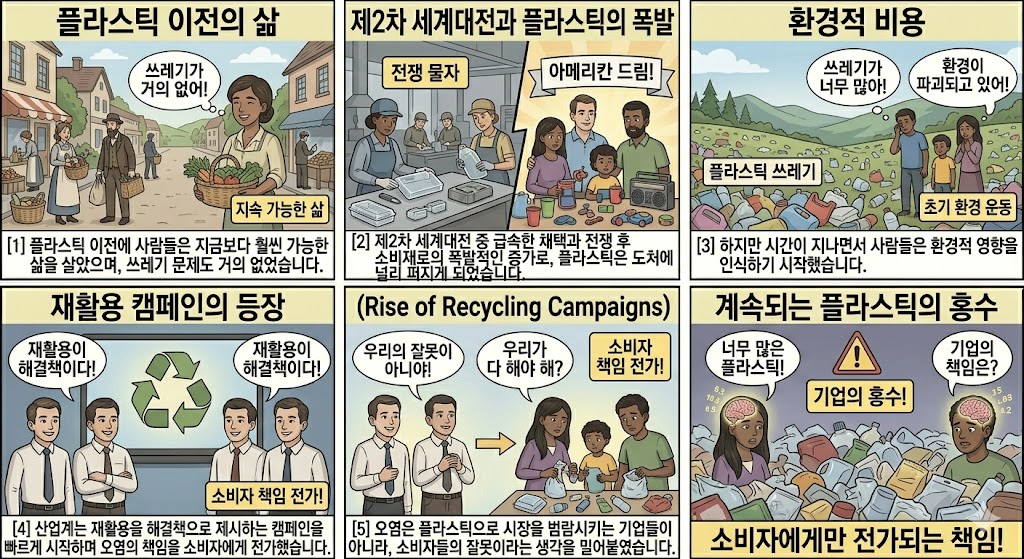
37. We first need to understand the short but hidden history behind the plastics industry and how it became deeply rooted in our daily lives. Before plastic, people lived more sustainably, with far fewer waste problems than we face today.
(A) However, the plastics industry was quick to counter these concerns, launching campaigns that presented recycling as the solution to all our problems. They pushed the idea that pollution was the fault of consumers, not the corporations flooding the market with plastic.
(B) This dream came with a price. Over time, people began to notice the environmental impact, and the early seeds of today’s environmental movement were planted.
(C) However, after the invention of plastic, its rapid adoption during World War II, and its explosion into consumer goods, plastic was everywhere. The growing industry came to symbolize the convenience and prosperity of the American dream.
① (A) - (C) - (B) ② (B) - (A) - (C) ③ (B) - (C) - (A) ④ (C) - (A) - (B) ⑤ (C) - (B) - (A)
[1] We first need to understand the short but hidden history behind the plastics industry and how it became deeply rooted in our daily lives.
[2] (C) After its rapid adoption during World War II and its explosion into consumer goods, plastic was everywhere, symbolizing the convenience and prosperity of the American dream.
[3] (B) This dream came with a price; people began to notice the environmental impact, planting the seeds of the environmental movement.
[4] (A) The plastics industry countered these concerns by launching campaigns that presented recycling as the solution to all our problems.
[5] (A) They pushed the idea that pollution was the fault of consumers, not the corporations flooding the market with plastic.
[내용 연결 & 핵심 키워드 통합 정리]
1단계: 플라스틱의 폭발적 보급과 상징성 (The Rise of Plastic)
플라스틱은 제2차 세계대전(World War II) 중 급격히 채택되었고, 이후 소비재로 쏟아져 나오며 어디에나 존재하게 되었습니다. 당시 성장하던 플라스틱 산업은 **아메리칸 드림(American dream)**의 상징인 **편리함과 번영(convenience and prosperity)**을 대변했습니다.
2단계: 환경적 대가와 시민 의식의 성장 (The Price & Awareness)
이러한 번영에는 **대가(price)**가 따랐습니다. 시간이 흐르며 사람들은 플라스틱이 환경에 미치는 악영향을 인지하기 시작했고, 이것이 오늘날 **환경 운동(environmental movement)**의 씨앗이 되었습니다.
3단계: 기업의 책임 전가 전략 (Shifting the Blame)
플라스틱 업계는 이러한 우려에 맞서 **재활용(recycling)**을 모든 문제의 해결책인 양 홍보하는 캠페인을 시작했습니다. 그들은 오염의 책임이 플라스틱을 대량으로 쏟아내는 **기업(corporations)**이 아니라, 이를 사용하는 **소비자(consumers)**의 잘못이라는 프레임을 씌워 책임을 전가했습니다.
쉽게 암기하는 "공식“
- (태동) WWII & American Dream → Convenience & Prosperity 🏠✨
- (각성) Environmental Impact → Environmental Movement 🌿⚠️
- (반격) Industry's Campaign → Recycling = Solution ♻️❓
- (본질) Pollution = Consumer's Fault (Not Corporations!) 👤🚫🏢
주제·제목·요약
주제 (Topic)
The history of the plastics industry and its strategy to shift environmental responsibility to consumers
플라스틱 산업의 역사와 환경적 책임을 소비자에게 전가하려는 전략
제목 (Title)
The Hidden Side of Plastic: How Corporations Shifted the Blame
플라스틱의 숨겨진 이면: 기업들은 어떻게 책임을 전가했는가
요약 (Summary)
While plastic initially symbolized American prosperity, its environmental cost led to public concern, which the plastics industry countered by promoting recycling and framing pollution as a consumer responsibility rather than a corporate issue.
플라스틱은 처음에 미국의 번영을 상징했으나, 그 환경적 대가는 대중의 우려를 불러일으켰고, 플라스틱 업계는 재활용을 홍보하며 오염을 기업의 문제가 아닌 소비자의 책임으로 프레임을 씌움으로써 이에 맞섰다.
"리사이클링이 사실은 기업들이 자기네 잘못을 감추려고 만든 영리한 마케팅에서 시작된 거야"
💡 팁: [5]번 문장의 **"fault of consumers, not the corporations"**는 이 지문의 핵심 비판 지점입니다. 환경 오염의 주범인 기업이 마케팅을 통해 교묘하게 시민들에게 죄책감을 부여했다는 인과관계를 순서 배열 시 꼭 확인하세요!
🧴 플라스틱 산업의 이면: 편리함의 환상과 책임의 전가
플라스틱 이전의 지속 가능한 삶
[1] We first need to understand (우리는 먼저 이해할 필요가 있다) / the short but hidden history (짧지만 숨겨진 역사를) / behind the plastics industry (플라스틱 산업 뒤에 있는) / and how it became deeply rooted in our daily lives (그리고 그것이 어떻게 우리 일상생활에 깊이 뿌리 내리게 되었는지를).
우리는 먼저 플라스틱 산업 뒤에 숨겨진 짧은 역사를 이해해야 하며, 그것이 어떻게 우리 일상에 깊숙이 자리 잡았는지 알아야 한다.
- how (의문사) + it (주어) + became (동사): 간접 의문문 어순 (어떻게 ~했는지)
- 친구 단어 (의미 단위):
- hidden history: 숨겨진 역사
- plastics industry: 플라스틱 산업
- became deeply rooted in: ~에 깊이 뿌리 내리다
- daily lives: 일상생활
- 표현 포인트:
- [병렬 구조] understand의 목적어로 명사구(the history)와 의문사절(how it became...)이 연결된 덩어리입니다.
- [비유적 표현] deeply rooted는 식물이 뿌리를 내리듯 완전히 정착했음을 나타내는 친구입니다.
[2] Before plastic, people lived more sustainably (플라스틱 이전에는 사람들이 더 지속 가능하게 살았다), / with far fewer waste problems (훨씬 더 적은 쓰레기 문제와 함께) / than we face today (우리가 오늘날 직면하고 있는 것보다).
플라스틱이 생기기 전, 사람들은 우리가 오늘날 직면한 것보다 훨씬 더 적은 쓰레기 문제 속에서 더 지속 가능하게 살았다.
- far fewer: '훨씬 더 적은' (비교급 강조 부사 far)
- 친구 단어 (의미 단위):
- lived more sustainably: 더 지속 가능하게 살았다
- far fewer waste problems: 훨씬 더 적은 쓰레기 문제들
- we face today: 우리가 오늘날 직면한
- 표현 포인트:
- [비교급 강조] far가 fewer를 강조하여 "훨씬 더 적은"이라는 의미의 덩어리를 만듭니다.
플라스틱의 확산과 미국적 풍요의 상징
[3] However, after the invention of plastic (하지만 플라스틱의 발명 이후), / its rapid adoption during World War II (제2차 세계 대전 동안의 빠른 채택), / and its explosion into consumer goods (그리고 소비재로의 폭발적인 확대 이후), / plastic was everywhere (플라스틱은 어디에나 있었다).
하지만 플라스틱의 발명, 제2차 세계 대전 중의 급격한 도입, 그리고 소비재로의 폭발적 확산을 거치며 플라스틱은 도처에 널리 퍼지게 되었다.
- 친구 단어 (의미 단위):
- invention of plastic: 플라스틱의 발명
- rapid adoption: 빠른 채택(도입)
- explosion into consumer goods: 소비재로의 폭발적 보급
- 표현 포인트:
- [나열] after 전치사 뒤에 세 가지 역사적 사건 덩어리가 병렬로 연결되어 플라스틱 시대를 설명합니다.
[4] The growing industry came to symbolize (성장하는 산업은 상징하게 되었다) / the convenience and prosperity (편리함과 번영을) / of the American dream (아메리칸 드림의).
성장하는 플라스틱 산업은 아메리칸 드림의 편리함과 번영을 상징하게 되었다.
- come to V: ~하게 되다
- 친구 단어 (의미 단위):
- came to symbolize: 상징하게 되다
- convenience and prosperity: 편리함과 번영
- the American dream: 아메리칸 드림
- 표현 포인트:
- [상태 변화] come to V는 "~하게 되다"라는 변화를 나타내는 중요한 덩어리 친구입니다.
환경적 대가와 초기 환경 운동
[5] This dream came with a price (이 꿈에는 대가가 따랐다).
이러한 꿈에는 대가가 따랐다.
[6] Over time (시간이 흐르면서), / people began to notice the environmental impact (사람들은 환경적 영향을 알아차리기 시작했다), / and the early seeds of today’s environmental movement were planted (그리고 오늘날 환경 운동의 초기 씨앗이 뿌려졌다).
시간이 지나면서 사람들은 환경적 영향을 인식하기 시작했고, 오늘날 환경 운동의 초기 씨앗이 심어졌다.
- were planted: '심어졌다' (수동태)
- 친구 단어 (의미 단위):
- came with a price: 대가가 따르다 (수반되다)
- notice the environmental impact: 환경적 영향을 알아차리다
- early seeds of environmental movement: 환경 운동의 초기 씨앗들
- 표현 포인트:
- [비유] seeds ... were planted는 어떤 움직임이 시작되었음을 은유적으로 표현한 덩어리입니다.
- the early seeds of today’s environmental movement were planted 이 의미하는 것은?
기업의 대응: 재활용 캠페인과 책임 전가
[7] However, the plastics industry was quick to counter these concerns (하지만 플라스틱 산업은 이러한 우려에 빠르게 대응했다), / launching campaigns (캠페인을 시작하면서) / that SX presented recycling as the solution to all our problems (재활용을 우리 모든 문제의 해결책으로 제시하는).
그러나 플라스틱 산업은 재활용을 모든 문제의 해결책으로 제시하는 캠페인을 시작하며 이러한 우려에 발 빠르게 대응했다.
- launching: 분사구문 (~를 시작하며)
- present A as B: A를 B로 제시하다/표현하다
- 친구 단어 (의미 단위):
- be quick to V: 빠르게 ~하다
- counter these concerns: 이러한 우려를 대응하다
- quick to counter: 빠르게 대응(반격)하다
- launching campaigns: 캠페인을 시작하다(착수하다)
- present A as B: A를 B로 제시하다
- solution to 명사: ~에 대한 해결책
- solution to all our problems: 우리 모든 문제에 대한 해결책
- 표현 포인트:
- [분사구문] launching은 산업계의 즉각적인 대응 방식을 설명하는 덩어리입니다.
- [관계대명사] that presented...가 campaigns를 수식하며 캠페인의 기만적인 내용을 설명합니다.
[8] They pushed the idea (그들은 생각/아이디어를 밀어붙였다) / that(which x) pollution was the fault of consumers (오염은 소비자의 잘못이라는), / not the corporations [flooding the market with plastic] ( [시장에 플라스틱을 쏟아내는] 기업들이 아니라).
그들은 오염이 시장에 플라스틱을 쏟아내는 기업이 아니라 소비자의 잘못이라는 생각을 강요했다.
- that: the idea와 동격을 이루는 접속사 (~라는 생각)
- flooding: '쏟아내는' (앞의 corporations를 수식하는 현재분사구)
- 친구 단어 (의미 단위):
- pushed the idea that(동격접속사) + 완전한 문장: ~라는 생각을 밀어붙이다(강요하다)
- fault of consumers: 소비자의 과실/잘못
- flood A with B: A를 B로 넘치게 하다 / 엄청 많이 주다
- flooding the market with: 시장에 ~을 쏟아내다/범람시키다
- 표현 포인트:
- [동격의 that] the idea와 that절은 동격 관계로, 기업의 책임 회피 전략을 명확히 보여줍니다.
- [현재분사구] flooding...이 corporations를 수식하여 기업의 무분별한 생산을 비판하는 덩어리입니다.
지문의 요지: 플라스틱 산업은 편리함과 번영을 앞세워 성장했지만, 환경 문제가 대두되자 '재활용'이라는 키워드를 이용해 환경 오염의 책임을 기업이 아닌 소비자에게 전가하는 캠페인을 펼쳤습니다.
1. 주어진 글 다음에 이어질 글의 순서로 가장 적절한 것은? [2.8점]
We first need to understand the short but hidden history behind the plastics industry and how it became deeply rooted in our daily lives.
(A) The plastics industry countered these concerns by launching campaigns that presented recycling as the solution to all our problems. They pushed the idea that pollution was the fault of consumers, not the corporations flooding the market with plastic.
(B) This dream came with a price; people began to notice the environmental impact, planting the seeds of the environmental movement.
(C) After its rapid adoption during World War II and its explosion into consumer goods, plastic was everywhere, symbolizing the convenience and prosperity of the American dream.
① (A) - (C) - (B) ② (B) - (A) - (C) ③ (B) - (C) - (A) ④ (C) - (A) - (B) ⑤ (C) - (B) - (A)
2. 다음 글의 제목으로 가장 적절한 것은? [2.6점]
We first need to understand the short but hidden history behind the plastics industry and how it became deeply rooted in our daily lives. After its rapid adoption during World War II and its explosion into consumer goods, plastic was everywhere, symbolizing the convenience and prosperity of the American dream. This dream came with a price; people began to notice the environmental impact, planting the seeds of the environmental movement. The plastics industry countered these concerns by launching campaigns that presented recycling as the solution to all our problems. They pushed the idea that pollution was the fault of consumers, not the corporations flooding the market with plastic.
① The Unstoppable Evolution of Plastic Materials ② How the Plastics Industry Shifted the Blame for Pollution ③ The American Dream: Built on Convenience and Prosperity ④ Why Recycling is the Ultimate Solution to Environmental Issues ⑤ The Historical Background of the Global Environmental Movement
[서술형 1번] 다음 글의 밑줄 친 우리말의 의미에 맞게 영어로 작성하시오. [6점]
We first need to understand the short but hidden history behind the plastics industry and how it became deeply rooted in our daily lives. After its rapid adoption during World War II and its explosion into consumer goods, plastic was everywhere, symbolizing the convenience and prosperity of the American dream. This dream came with a price; people began to notice the environmental impact, planting the seeds of the environmental movement. The plastics industry countered these concerns by launching campaigns that presented recycling as the solution to all our problems. <그들은 오염이 플라스틱으로 시장을 넘쳐나게 하는 기업들이 아니라, 소비자의 잘못이라는 생각을 밀어붙였다.>
[ 조 건 ]
- 동격의 접속사 that을 반드시 활용할 것.
- 명사를 뒤에서 수식하는 현재분사(~ing) 구문을 포함할 것.
- 아래 [ 보기 ]에 주어진 11개의 어구들을 모두 한 번씩만 사용하여 바르게 배열할 것.
- 필요한 경우 구두점(콤마)을 추가할 것.
[ 보 기 ] not / flooding / the idea / they / the fault of consumers / the market with plastic / the corporations / that / pollution / was / pushed
⇨ _____________________________________________________________________________,
정답 및 해설
1. 정답: ⑤
- 해설: 주어진 문장에서 플라스틱 산업의 역사와 일상생활에 뿌리내린 배경을 언급합니다. 이후 세계 2차 대전 중 도입되어 아메리칸드림을 상징하게 된 긍정적 측면 (C)가 오고, 'This dream'을 받아 그 대가로 환경 운동이 싹트게 된 (B)가 이어집니다. 마지막으로 이러한 환경적 우려에 대해 플라스틱 산업계가 어떻게 반격(countered)했는지 보여주는 (A)가 오는 것이 논리적입니다.
2. 정답: ②
- 해설: 플라스틱이 일으킨 환경 문제의 책임을 재활용 캠페인을 통해 소비자에게 전가하려 했던 플라스틱 산업의 숨겨진 역사를 다루고 있으므로, "플라스틱 산업이 오염에 대한 책임을 어떻게 전가했는가(How the Plastics Industry Shifted the Blame for Pollution)"가 제목으로 가장 적합합니다.
3. 정답: They pushed the idea that pollution was the fault of consumers, not the corporations flooding the market with plastic.
- 해설 및 지도 포인트: 학생들이 the idea that ~ (동격)과 the corporations flooding ~ (분사 수식)을 각각 하나의 긴 '친구단어' 덩어리로 인식하여 직독직해하고 영작할 수 있는지 평가하는 문제입니다. 우리말의 "A가 아니라 B" 구조가 영어에서는 문맥상 B, not A 형태로 자연스럽게 배열되어야 한다는 점을 짚어주시면, 바른 해석 및 영작 훈련에 큰 도움이 될 것입니다.
'고1 > 고1 3월 모의고사' 카테고리의 다른 글
| 2026년 고1 3월 모의고사 영어 39번 해설 및 분석 변형문제 (0) | 2026.03.27 |
|---|---|
| 2026년 고1 3월 모의고사 영어 38번 해설 및 분석 변형문제 (0) | 2026.03.27 |
| 2026년 고1 3월 모의고사 영어 36번 해설 및 분석 변형문제 (1) | 2026.03.27 |
| 2026년 고1 3월 모의고사 영어 35번 해설 및 분석 변형문제 (0) | 2026.03.27 |
| 2026년 고1 3월 모의고사 영어 34번 해설 및 분석 변형문제 (0) | 2026.03.27 |