2025년 고1 9월 모의고사 35번 해설 및 분석
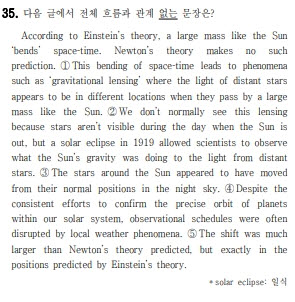
1) 문제 제시 (영어 지문 + 선택지)
Passage (원문 그대로)
Humans for centuries have dreamed of machines that could become intelligent and make human-like decisions. There have been myths about robots, automatons, and artificial beings since ancient Greece (e.g., the myth of Pandora, who released all the ills upon the world). ① Likewise, literature throughout history has dreamed of creating human-like creatures and thinking machines (e.g., Mary Shelley’s Frankenstein). ② In 1950, British mathematician Alan Turing asked whether machines could think and reason like humans and then developed the Turing test to measure a machine’s intelligence and whether the machines can think autonomously. ③ A few years later, MIT professor John McCarthy coined “artificial intelligence,” replacing the previously used expression “automata studies.” ④ But artificial intelligence didn’t stop there: its first major appearance was in a movie where feeling artificial intelligence replaced human characters with robots. ⑤ Since then, artificial intelligence has become the focus and the study of “making intelligent machines” that are programmed to think like humans—endowed by their creators with reasoning and learning.
다음 글에서 전체 흐름과 관계없는 문장은?
① Sentence ① — ①번 문장
② Sentence ② — ②번 문장
③ Sentence ③ — ③번 문장
④ Sentence ④ — ④번 문장 ✅
⑤ Sentence ⑤ — ⑤번 문장
2) 직독직해 (문장별 어휘·문법 포함)
S0 (도입)
EN (slash) Humans for centuries / have dreamed of machines / that could become intelligent / and make human-like decisions.
KR 직독 인류는 수세기 동안 / 기계를 꿈꿔 왔다 / 지능을 갖추고 / 인간과 비슷한 결정을 내릴 수 있는.
자연 해석 인류는 오래전부터 지능을 갖고 인간처럼 판단하는 기계를 꿈꿔 왔다.
어휘 for centuries 수세기 동안 / dream of 을 꿈꾸다 / intelligent 지능 있는 / human-like 인간과 비슷한 / decision 결정.현재 계속) + 관계절 that could become….
문법 현재완료 have dreamed(과거
1) 문법·표현 포인트
- for centuries (= 수세기 동안)
- Syn: for ages, for many centuries
- have dreamed of V-ing (= ~을 꿈꿔왔다; 현재완료)
- Syn: have long imagined, have aspired to
- machine(s) (= 기계, 장치)
- Syn: device(s), apparatus
- that could become intelligent (= 지능을 갖게 될 수 있는; 관계절 + 조동사 could 가능성/잠재)
- Syn: potentially intelligent, capable of intelligence
- make human-like decisions (= 인간과 유사한 의사결정을 내리다)
- Syn: take human-like choices, perform human-level decision-making
- decision-making (= 의사결정 과정; 합성명사)
2) 부분 분석
- Humans for centuries → “인류는 수세기 동안” (기간 부사구 강조)
- have dreamed of machines → “기계를 꿈꿔왔다” (현재완료의 지속)
- that could become intelligent → “그 기계가 지능을 갖게 될 수 있는” (관계절: machines 수식, could 가능성)
- and make human-like decisions. → “그리고 인간과 유사한 의사결정을 내릴 수 있는”
3) 문장 뼈대
- S(주어): Humans(인류)
- V(동사): have dreamed of(…을 꿈꿔왔다)
- O(목적어): machines(기계) + [관계절: that could become intelligent and make human-like decisions]
- ➡ 한국어 풀해석: 인류는 수세기 동안, 지능을 갖게 되고 인간과 유사한 의사결정을 내릴 수 있는 기계를 꿈꿔왔다.
4) 직독직해
EN: Humans for centuries / have dreamed of machines / that could become intelligent / and make human-like decisions.
KO: 인류는 수세기 동안 / 기계를 꿈꿔왔다 / (그 기계가) 지능을 갖게 될 수 있고 / 인간과 유사한 의사결정을 내릴 수 있는.
5) 자연스러운 번역
인류는 수세기 동안, 지능을 갖추어 인간처럼 판단하는 기계를 꿈꿔 왔습니다.
6) 표현 정리 (표)
| for centuries | 수세기 동안 | have for centuries dreamed/imagined |
| have dreamed of V-ing | ~을 꿈꿔왔다 | dream of creating/building ~ |
| become intelligent | 지능을 갖게 되다 | systems become more intelligent |
| make human-like decisions | 인간과 유사한 의사결정 하다 | make complex/ethical decisions |
| decision-making | 의사결정(과정) | human-level decision-making |
7) 문장의 의미 설명
문장은 오랜 시간에 걸친 인류의 상상—인간과 유사한 판단 능력을 가진 지능 기계—을 현재완료로 드러낸다. 관계절 **that could …**은 가능성/잠재성을 강조하며, “지능”과 “의사결정”이라는 두 핵심 능력을 병렬로 제시해 인간 유사성의 기준을 구체화한다.
8) 실전 예문
- People have dreamed of machines that can become intelligent.
➡ 사람들은 지능을 갖게 될 수 있는 기계를 오랫동안 꿈꿔 왔어요. - Some robots try to make human-like decisions in games and stories.
➡ 어떤 로봇들은 게임이나 이야기에서 인간처럼 결정을 내리려고 해요. - For centuries, writers imagined machines that could help with decision-making.
➡ 수세기 동안, 작가들은 의사결정을 도와주는 기계를 상상해 왔어요.
S0-2
EN (slash) There have been myths / about robots, automatons, and artificial beings / since ancient Greece / (e.g., the myth of Pandora, who released all the ills upon the world).
KR 직독 신화들이 있어 왔다 / 로봇·자동 장치·인조 존재에 관한 / 고대 그리스 이래 / (예: 판도라 신화—세상의 재앙을 풀어 놓은).
자연 해석 로봇·자동장치·인조 존재에 관한 신화는 고대 그리스부터 있었다.
어휘 myth 신화 / automaton 자동 장치 / artificial 인공의 / since ~이래 / release 풀어 놓다.
문법 현재완료 There have been + since 시점 / 동격 괄호(e.g.…) / 관계절 who released….
1) 문법·표현 포인트
- there have been (existential present perfect) = (지금까지) 존재해 왔다
Syn: have existed, have appeared / Ant: have not existed
Collocations: There have been reports/cases/myths - myth(s) (n.) = 신화, 전설
Syn: legend, tale / Ant: fact, reality
Collocations: ancient myths, creation myths - robot(s) (n.) = 로봇
Collocations: humanoid robots, service robots - automaton(s) (n.) = 자동인형, 오토마톤 (pl. automata/automatons)
Syn: mechanical figure / Ant: —
Collocations: clockwork automata - artificial being(s) (n.) = 인공 존재
Syn: synthetic being, man-made being / Ant: natural being - since + time (prep.) = ~이래로 (현재완료와 호응)
Syn: from … onward / Ant: until
Collocations: since ancient Greece, since 1900 - (e.g., …) = 예를 들어
Syn: for example, for instance - the myth of Pandora (prop. n.) = 판도라 신화
- who released all the ills upon the world (nonrestrictive relative clause) = (그녀가) 세상에 모든 재앙을 풀어놓았다
Syn: evils/troubles / Ant: blessings
Note: upon = on/onto(격식체)
2) 부분 분석
- There have been myths → “신화가 존재해 왔다” (존재 구문 + 현재완료로 과거부터 현재까지의 지속)
- about robots, automatons, and artificial beings → “로봇, 자동인형, 인공 존재에 관한” (주제 범주 나열)
- since ancient Greece → “고대 그리스 이래로” (시점 제시, since + 현재완료)
- (e.g., the myth of Pandora, → “(예: 판도라 신화,” (대표 사례 제시)
- who released all the ills upon the world). → “그녀가 세상에 모든 재앙을 풀어놓았다는).” (비제한적 관계절로 내용 보충)
3) 문장 뼈대
S(형식주어): There / V: have been / 진주어: myths (+ about …)
부사구: since ancient Greece
보충(괄호 예시): (e.g., the myth of Pandora, who …)
➡ 한국어 풀해석: 고대 그리스 이래로 로봇·자동인형·인공 존재에 관한 신화가 존재해 왔다. 예를 들어, 판도라 신화(그녀가 세상의 모든 재앙을 풀어놓았다는 이야기)가 있다.
4) 직독직해
EN: There have been myths / about robots, automatons, and artificial beings / since ancient Greece / (e.g., the myth of Pandora, / who released all the ills upon the world).
KO: 존재해 왔다 / 로봇, 자동인형, 인공 존재에 관한 신화가 / 고대 그리스 이래로 / (예: 판도라 신화, / (그녀가) 세상에 모든 재앙을 풀어놓았다는).
5) 자연스러운 번역
고대 그리스 이래로, 로봇·자동인형·인공 존재에 관한 신화는 끊임없이 존재해 왔다. 예컨대 판도라 신화가 그러한데, 판도라는 세상에 온갖 재앙을 풀어놓았다고 전해진다.
6) 표현 정리 (표)
| there have been | (지금까지) 존재해 왔다 | There have been many myths/cases |
| since ancient Greece | 고대 그리스 이래로 | since 1900 / since last year |
| myths about N | N에 관한 신화 | myths about robots/creation |
| automaton/automata | 자동인형/오토마톤 | clockwork automata |
| artificial beings | 인공 존재 | man-made/synthetic beings |
| the myth of Pandora | 판도라 신화 | released all the ills upon the world |
7) 문장의 의미 설명
핵심 메시지: 인공 존재(로봇·자동인형)에 대한 상상과 불안은 현대 기술만의 산물이 아니라 고대부터 이어진 오래된 주제임을 강조한다. 현재완료 + since로 역사적 지속성을 드러내고, 판도라 사례는 “통제되지 않은 창조물이 재앙을 가져온다”는 문화적 원형을 상기시킨다. 또한 automaton의 복수형(automata/automatons)처럼 용례상의 변형도 존재한다.
8) 실전 예문
- EN: There have been myths about robots since ancient times.
➡ KO: 오래전부터 로봇에 관한 신화가 있어 왔다. - EN: People told stories of automata and artificial beings.
➡ KO: 사람들은 **자동인형(오토마톤)**과 인공 존재에 대한 이야기를 전했다. - EN: In one story, Pandora released many ills into the world.
➡ KO: 한 이야기에서 판도라가 많은 재앙을 세상에 풀어놓았다.
①
EN (slash) Likewise, / literature throughout history / has dreamed of creating / human-like creatures / and thinking machines / (e.g., Mary Shelley’s Frankenstein).
KR 직독 마찬가지로, / 역사 전반의 문학은 / 창조하기를 꿈꿔 왔다 / 인간 같은 피조물과 / 생각하는 기계를 / (예: 메리 셸리의 프랑켄슈타인).
자연 해석 문학도 인간과 같은 존재와 사고하는 기계를 오래 꿈꿔 왔다.
어휘 likewise 마찬가지로 / literature 문학 / create 창조하다 / thinking machine 사고하는 기계.
문법 현재완료 has dreamed; 예시 괄호.
1) 문법·표현 포인트
- likewise (adv.) = 마찬가지로, 이와 같이
Syn: similarly(비슷하게), in the same way(같은 방식으로) - throughout history (adv. phrase) = 역사 전반에 걸쳐
Colloc: throughout history/literature(역사/문학 전반에 걸쳐) - literature (n.) = 문학
Colloc: world literature(세계 문학), classic literature(고전 문학) - has dreamed of ~ing (present perfect) = ~을 꿈꿔 왔다
Syn: has long imagined(오랫동안 상상해 왔다)
Pattern: dream of + ~ing(…하는 것을 꿈꾸다) - create/creating (v./gerund) = 창조하다/창조하는 것
Colloc: create life/creatures(생명/존재를 창조하다) - human-like (adj.) = 인간 같은, 인간 유사한
Syn: humanoid(인간형의) - creature(s) (n.) = 존재, 피조물
- thinking machine(s) (n.) = 생각하는 기계, 지능 기계
Syn: intelligent machine(s)(지능형 기계) - e.g. (for example) = 예컨대, 예를 들어
- Mary Shelley’s Frankenstein (proper noun) = 메리 셸리의 『프랑켄슈타인』(소설 예시)
2) 부분 분석
- Likewise, → 마찬가지로, (앞 문맥과의 평행·유사성 신호)
- literature throughout history → 역사 전반의 문학은 (주어 범위 규정)
- has dreamed of creating → 창조하기를 꿈꿔 왔다 (현재완료: 과거→현재의 지속)
- human-like creatures → 인간 같은 존재들을 (목적어 1)
- and thinking machines → 그리고 생각하는 기계들을 (목적어 2 병렬)
- (e.g., Mary Shelley’s Frankenstein). → (예: 메리 셸리의 『프랑켄슈타인』) (예시 제시)
3) 문장 뼈대
- S(주어): literature throughout history
- V(동사): has dreamed of creating
- O(목적어): human-like creatures and thinking machines (+ e.g. 예시 괄호)
➡ 한국어 풀해석: 마찬가지로, 역사 전반의 문학은 인간 같은 존재와 생각하는 기계를 창조하는 꿈을 꾸어 왔다(예: 메리 셸리의 『프랑켄슈타인』).
4) 직독직해
EN: Likewise, / literature throughout history / has dreamed of creating / human-like creatures / and thinking machines / (e.g., Mary Shelley’s Frankenstein).
KO: 마찬가지로, / 역사 전반의 문학은 / 창조하기를 꿈꿔 왔다 / 인간 같은 존재들을 / 그리고 생각하는 기계들을 / (예: 메리 셸리의 『프랑켄슈타인』).
5) 자연스러운 번역
마찬가지로, 문학은 역사 내내 인간을 닮은 존재와 생각하는 기계를 만들어 내는 일을 꿈꿔 왔다. 예컨대 메리 셸리의 『프랑켄슈타인』이 그 예다.
6) 표현 정리 (표)
| likewise | 마찬가지로 | Likewise, + 진술(앞 내용과 평행) |
| throughout history | 역사 전반에 걸쳐 | occur throughout history(역사 전반에 일어나다) |
| dream of ~ing (has dreamed of) | ~을 꿈꾸다(~해 왔다) | dream of creating X(창조를 꿈꾸다) |
| human-like creatures | 인간 같은 존재들 | human-like robots/beings |
| thinking machines | 생각하는 기계(지능 기계) | intelligent/thinking machines |
| e.g. | 예컨대 | e.g., Frankenstein(예: 『프랑켄슈타인』) |
7) 문장의 의미 설명
핵심 메시지: 이 문장은 인류가 오랫동안 문학을 통해 ‘인간 닮은 존재’와 ‘사유하는 기계’를 상상해 왔음을 말한다. 담화 표지 Likewise는 앞 문맥과의 유사성을 잇고, 현재완료는 상상이 한 시대에 국한되지 않고 지속되어 왔음을 강조한다. 괄호 속 예시는 추상적 진술을 구체적 작품으로 연결해 독자의 이해를 돕는다.
8) 실전 예문
EN: Likewise, literature has dreamed of human-like creatures.
➡ KO: 마찬가지로, 문학은 인간 같은 존재들을 꿈꿔 왔어요.
EN: Writers dream of creating thinking machines.
➡ KO: 작가들은 생각하는 기계를 만들기를 꿈꿔요.
EN: Frankenstein is a famous example in literature.
➡ KO: **『프랑켄슈타인』**은 문학에서 유명한 예예요.
②
EN (slash) In 1950, / British mathematician Alan Turing / asked whether machines could think and reason like humans / and then developed the Turing test / to measure a machine’s intelligence / and whether the machines can think autonomously.
KR 직독 1950년에 / 수학자 앨런 튜링은 / 기계가 인간처럼 사고·추론할 수 있는지 물었고 / 이어 튜링 테스트를 개발했다 / 기계의 지능을 측정하고 / 기계가 자율적으로 사고할 수 있는지 (측정하기) 위해.
자연 해석 1950년 앨런 튜링은 기계지능을 묻고 이를 재는 튜링 테스트를 만들었다.
어휘 reason 추론하다 / measure 측정하다 / autonomously 자율적으로.
문법 asked whether S+V + to V 목적; 병렬 to measure … and (to measure) whether…(생략 병렬).
1) 문법·표현 포인트
- In 1950 (1950년에) (adv. phrase) — 시간 부사구로 문두 배치
- British mathematician (영국의 수학자) (n.)
- ask whether S+V (S가 V하는지 묻다) (v. pattern) · Syn: inquire whether (…인지 문의하다)
- think and reason (생각하고 추론하다) (v. pair) · Syn: reason like humans (인간처럼 추론하다)
- like humans (인간처럼) (prep. phrase)
- and then (그리고 나서/그 뒤에) (adv. connector) — 사건의 순서 표시
- develop the Turing test (튜링 테스트를 고안하다) (v.+n.)
- measure a machine’s intelligence (기계의 지능을 측정하다) (v.+n.)
- be programmed to + V (…하도록 프로그래밍되다) (v. pattern)
- think autonomously (자율적으로/자기 판단으로 생각하다) (v. phrase)
2) 부분 분석
- [In 1950,] → “1950년에,” (역사적 시점 제시)
- [British mathematician Alan Turing] → “영국의 수학자 앨런 튜링이” (주어 확인)
- [asked whether machines could think and reason like humans] → “기계가 인간처럼 생각·추론할 수 있는지 물었고”
- [and then developed the Turing test] → “그 뒤 튜링 테스트를 고안했고” (행위의 순서)
- [to measure a machine’s intelligence] → “기계의 지능을 측정하기 위해” (목적)
- [and whether the machines can think autonomously] → “그리고 기계가 자율적으로 생각할 수 있는지(를 평가하기 위해)” (평가 항목 추가)
3) 문장 뼈대
- S(주어): British mathematician Alan Turing (영국 수학자 앨런 튜링)
- V1: asked (물었다) — whether-절: machines could think and reason like humans (기계가 인간처럼 생각·추론할 수 있는지)
- V2: developed (고안했다) — 목적: the Turing test (튜링 테스트)
- Purpose(부가 목적): to measure a machine’s intelligence (기계 지능을 측정하기 위해) and [assess] whether … think autonomously (자율적 사고 가능성 평가)
➡ 한국어 풀해석: 1950년, 영국의 수학자 앨런 튜링은 기계가 인간처럼 생각하고 추론할 수 있는지를 물었고, 이어서 기계의 지능과 자율적 사고 가능성을 평가하기 위해 튜링 테스트를 고안했다.
4) 직독직해
EN: In 1950, / British mathematician Alan Turing / asked whether machines could think and reason like humans / and then developed the Turing test / to measure a machine’s intelligence / and whether the machines can think autonomously.
KO: 1950년에, / 영국의 수학자 앨런 튜링이 / 기계가 인간처럼 생각하고 추론할 수 있는지 묻고 / 그리고 나서 튜링 테스트를 고안하여 / 기계의 지능을 측정하고 / 기계가 자율적으로 생각할 수 있는지도 (평가하도록).
5) 자연스러운 번역
1950년, 영국의 수학자 앨런 튜링은 기계가 인간처럼 생각하고 추론할 수 있는지를 물었고, 이어 기계의 지능과 자율적 사고 가능성을 평가하기 위해 튜링 테스트를 고안했다.
6) 표현 정리 (표)
| ask whether S+V | S가 V하는지 묻다 | ask whether machines could think |
| think and reason like humans | 인간처럼 생각·추론하다 | reason like humans → 인간처럼 추론하다 |
| develop the Turing test | 튜링 테스트를 고안하다 | develop a test to measure intelligence |
| measure a machine’s intelligence | 기계의 지능을 측정하다 | measure machine intelligence |
| think autonomously | 자율적으로 생각하다 | assess whether machines think autonomously |
7) 문장의 의미 설명
이 문장은 1950년 튜링이 제기한 핵심 질문(기계가 인간처럼 사고·추론 가능한가)과, 그 질문을 검증하기 위해 설계한 튜링 테스트의 목적을 한 문장에 압축한다. 시제는 과거 사건이므로 could가 자연스럽고, 병렬 구조는 “to measure … and (to) assess whether …”처럼 동사형 병렬을 맞추면 더 매끄럽다. 또한 “the machines can think” 대신 과거 맥락에 맞춰 could로 통일하거나, “assess whether machines can…”으로 현재 능력 평가로 해석해도 무방하다.
8) 실전 예문
- EN: In 1950, Turing asked whether machines could think.
➡ KO: 1950년에 튜링은 기계가 생각할 수 있는지 물었어요. - EN: He developed the Turing test to measure machine intelligence.
➡ KO: 그는 기계의 지능을 측정하려고 튜링 테스트를 만들었어요. - EN: The test checks whether a machine can reason like a human.
➡ KO: 그 테스트는 기계가 인간처럼 추론할 수 있는지 확인해요.
③
EN (slash) A few years later, / MIT professor John McCarthy / coined “artificial intelligence,” / replacing the previously used expression “automata studies.”
KR 직독 몇 해 뒤 / MIT의 존 매카시는 / “인공지능”이라는 용어를 만들었고, / 이전에 쓰이던 “automata studies”를 대체했다.
자연 해석 이후 존 매카시가 ‘AI’라는 말을 만들며 기존 용어를 대체했다.
어휘 coin(동사) 신조어를 만들다 / replace 대체하다 / expression 용어·표현 / previously 이전에.
문법 분사구문 replacing ~(동시·결과).
1) 문법·표현 포인트
- a few years later (= 몇 년 후에)
- Syn: some years later, after a few years
- professor (n.) (= 교수) / MIT (= 매사추세츠 공과대학교)
- coin (a term) (v.) (= (신조어를) 만들다, 명명하다)
- Syn: invent, originate, name · Ant: adopt, borrow
- Colloc: coin a term/phrase/neologism
- artificial intelligence (AI) (n.) (= 인공지능)
- Colloc: define AI, modern AI systems
- replace A with B (v.) (= A를 B로 대체하다) / replacing (= 대체하면서; 분사구문: 결과/동시)
- Syn: substitute B for A, supersede
- previously used expression/term (= 이전에 쓰이던 표현/용어)
- automata studies (n.) (= 자동장치/오토마타 연구(라는 표현))
- Note: 과거 문맥의 용어로 field/line of research 의미
2) 부분 분석
- A few years later, → “몇 년 후에,” (시간 배경 제시)
- MIT professor John McCarthy → “MIT의 존 매카시 교수가” (주어)
- coined “artificial intelligence,” → “ ‘인공지능(AI)’이라는 말을 만들었고 ” (동사 coin)
- replacing the previously used expression “automata studies.” → “이전에 쓰이던 ‘오토마타 연구’라는 표현을 대체하면서 ” (현재분사 replacing: 결과/수반 동작)
3) 문장 뼈대
- S(주어): MIT professor John McCarthy
- V(동사): coined
- O(목적어): “artificial intelligence” (용어)
- 부사(시간): A few years later
- 분사구문(결과): replacing the previously used expression “automata studies”
- ➡ 한국어 풀해석: 몇 년 후, MIT의 존 매카시 교수는 ‘인공지능’이라는 용어를 만들어, 이전에 쓰이던 ‘오토마타 연구’라는 표현을 대체했다.
4) 직독직해
EN: A few years later, / MIT professor John McCarthy / coined “artificial intelligence,” / replacing / the previously used expression / “automata studies.”
KO: 몇 년 후, / MIT의 존 매카시 교수는 / ‘인공지능’이라는 말을 만들었고, / 대체하면서 / 이전에 쓰이던 표현 / ‘오토마타 연구’를.
5) 자연스러운 번역
몇 년 후, MIT의 존 매카시 교수는 ‘인공지능(AI)’이라는 용어를 만들어, 이전에 쓰이던 ‘오토마타 연구’라는 표현을 대체했습니다.
6) 표현 정리 (표)
| a few years later | 몇 년 후에 | appear a few years later |
| coin a term | 용어를 만들다/명명하다 | coin a name/phrase |
| artificial intelligence (AI) | 인공지능 | define AI, early AI research |
| replace A with B | A를 B로 대체하다 | replace old term with new term |
| previously used expression | 이전에 쓰이던 표현 | previously used term/label |
| replacing ~ (participle) | ~을 대체하면서(분사구문) | V-ing, thereby replacing A |
7) 문장의 의미 설명
문장은 **명명(coin)**이 개념의 틀을 바꾸는 힘을 보여 준다. replacing 분사구문은 ‘새 용어 도입 → 기존 표현 대체’라는 결과 관계를 압축하며, a few years later로 시간의 흐름을 제시해 용어 진화의 맥락을 만든다. 핵심 메시지는 과거의 **“automata studies”**라는 기술적 태그가 **“artificial intelligence”**라는 보다 포괄적·목표 지향적 태그로 전환되었다는 점이다.
8) 실전 예문
- A teacher coined a new term for our project, replacing the old name.
➡ 선생님이 우리 프로젝트에 새 용어를 만들어, 옛 이름을 바꿨어요. - A few years later, the club replaced its title with a new one.
➡ 몇 년 뒤, 동아리는 이름을 새로운 것으로 바꿨어요. - Writers sometimes coin words like AI to explain ideas more clearly.
➡ 작가들은 생각을 더 쉽게 설명하려고 AI 같은 말을 만들기도 해요.
④ ★ (이상 문장)
EN (slash) But artificial intelligence didn’t stop there: / its first major appearance was in a movie / where feeling artificial intelligence replaced human characters with robots.
KR 직독 그러나 인공지능은 거기서 멈추지 않았다: / 그것의 첫 주요한 등장은 영화였고 / 감정을 가진 인공지능이 인간 등장인물을 로봇으로 대체한 곳에서였다.
자연 해석 ‘AI의 첫 주요 등장이 영화에서 인간을 로봇이 대체한 것’이라는 내용은, 앞뒤의 역사·학문적 전개와 연결이 약하다(또 사실성·구체성도 부족).
어휘 appearance 등장 / character 등장인물 / replace 대체하다.
문법 where 장소 관계절.
왜 이상? 문단은 신화→문학→튜링→용어 탄생→학문적 발전의 역사 서술인데, ④는 영화 사례를 ‘첫 주요 등장’으로 규정해 흐름을 끊고 근거도 모호함.
⑤
EN (slash) Since then, / artificial intelligence has become the focus / and the study of “making intelligent machines” / that are programmed to think like humans — / endowed by their creators / with reasoning and learning.
KR 직독 그 이후 / 인공지능은 초점이 되었고 / “지능형 기계 만들기”라는 학문이 되었으며 / 인간처럼 생각하도록 프로그래밍된 / (창조자들에 의해) 추론과 학습 능력이 부여된.
자연 해석 그 뒤 AI는 인간처럼 생각하도록 설계된 지능형 기계를 연구하는 중심 분야가 되었다.
어휘 focus 초점 / be programmed to ~하도록 설계되다 / endow A with B A에게 B를 부여하다 / reasoning 추론 / learning 학습.
문법 Since then + 현재완료 / 관계절 that are programmed… / 과거분사구 endowed … with …(삽입).
1) 문법·표현 포인트
- since then (adv. phrase) = 그때부터, 그 이후로
Syn: from that time on(그때 이후로) - become the focus (v. phrase) = 중심/초점이 되다
Syn: come to the forefront(전면에 서다) - the study of ~ing (n. pattern) =
을 연구하는 학문/연구분야)
Syn: the field of ~( - make/creating intelligent machines (v./ger.) = 지능형 기계를 만들다/만드는 것
Syn: build smart systems(스마트 시스템을 만들다) - be programmed to V (passive) = ~하도록 프로그래밍되다
Syn: be designed to V(~하도록 설계되다) - think like humans (v. phrase) = 인간처럼 생각하다
Syn: human-like reasoning(인간 유사 추론) - endow A with B (v. pattern) = A에게 B를 부여하다
Syn: equip A with B(A에 B를 장착/부여하다), grant(부여하다) - reasoning and learning (n.) = 추론과 학습
2) 부분 분석
- Since then, → 시간 배경: “그때 이후로”
- artificial intelligence has become the focus → “인공지능이 초점/핵심이 되었다” (현재완료: 변화 결과)
- and the study of “making intelligent machines” → “‘지능형 기계를 만드는 것’을 연구하는 학문(분야)이 되었다” (동격/확장 설명)
- that are programmed to think like humans — → “인간처럼 생각하도록 프로그래밍된” (관계절: intelligent machines 수식) —
- endowed by their creators → “창조자(개발자)에 의해 부여되어” (수동 분사구)
- with reasoning and learning. → “추론과 학습 능력을 가지고” (with + 추상명사: 부여 내용)
3) 문장 뼈대
- 시간부사구: Since then
- S: artificial intelligence
- V: has become
- C: the focus and the study of “making intelligent machines”
- (machines) that are programmed to think like humans — endowed … with reasoning and learning
➡ 한국어 풀해석: 그때 이후로, 인공지능은 인간처럼 생각하도록 프로그래밍된 지능형 기계를 만드는 ‘연구의 초점’이자 그 자체로 ‘그 연구 분야’가 되었고, 그 기계들은 창조자들이 부여한 추론과 학습 능력을 갖추고 있다.
4) 직독직해
EN: Since then, / artificial intelligence has become the focus / and the study of “making intelligent machines” / that are programmed to think like humans — / endowed by their creators / with reasoning and learning.
KO: 그때 이후로, / 인공지능은 초점이 되었고 / ‘지능형 기계를 만드는 것’의 연구 분야가 되었으며 / 인간처럼 생각하도록 프로그래밍된 / (그 기계들은) 창조자들에 의해 부여되어 / 추론과 학습 능력을 갖는다.
5) 자연스러운 번역
그때 이후로, 인공지능은 인간처럼 생각하도록 프로그래밍된 지능형 기계를 만들려는 연구의 초점이자 그 자체의 연구 분야가 되었다. 이러한 기계들은 개발자들이 부여한 추론과 학습 능력을 갖추고 있다.
6) 표현 정리 (표)
| since then | 그때부터, 그 이후로 | since then, S + has become |
| become the focus | 초점/핵심이 되다 | become the focus of research |
| the study of ~ing | ~을 연구하는 학문/연구 | the study of making X |
| be programmed to V | ~하도록 프로그래밍되다 | programmed to think/learn |
| think like humans | 인간처럼 생각하다 | human-like thinking |
| endow A with B | A에게 B를 부여하다 | endow machines with abilities |
| reasoning and learning | 추론과 학습 | AI reasoning/learning abilities |
7) 문장의 의미 설명
핵심 메시지: ‘인공지능’은 단순한 기술이 아니라, “인간처럼 사고하는 기계를 만든다”는 목표를 중심으로 한 연구의 초점이자 학문 분야로 자리 잡았다는 선언이다. 관계절과 대시 뒤 분사구는 지능형 기계의 본질을 구체화한다: 프로그래밍(설계) → 부여된 능력(추론·학습). 문장은 시간 경과(since then)로 시작해 변화의 결과(has become)를 강조한다.
8) 실전 예문
EN: Since then, AI has become the focus of many projects.
➡ KO: 그때 이후로, AI는 많은 프로젝트의 초점이 되었어요.
EN: The robots are programmed to think like humans.
➡ KO: 그 로봇들은 인간처럼 생각하도록 프로그래밍되었어요.
EN: Engineers endow machines with learning abilities.
➡ KO: 엔지니어들은 기계에 학습 능력을 부여해요.
3) 자연스러운 전체 문단 해석
인류는 오래전부터 인간처럼 생각하고 결정하는 기계를 꿈꿔 왔고, 문학에서도 그런 상상이 이어졌다. 1950년 튜링은 기계가 생각할 수 있는지 물으며 튜링 테스트를 고안했고, 이어 매카시가 ‘인공지능’이라는 용어를 만들었다. 그 이후 AI는 인간처럼 사고하도록 설계된 지능형 기계를 연구하는 중심 분야가 되었다. (영화에서의 ‘첫 등장’ 운운은 문단의 역사·학문 전개 흐름과 맞지 않는다.)
4) 문제 풀이법 (How to Solve)
- 출제 의도: 문단의 논리 전개(계보·역사 흐름) 파악 → 비논리/비일관 문장 제거.
- 핵심 단서: 앞·뒤 문장들이 사상·학문적 진전을 시간순으로 제시.
- 오답 제거:
① 문학적 전통 언급 — 흐름에 부합.
② 튜링의 문제 제기·테스트 — 핵심 역사.
③ 매카시의 용어 제시 — 역사적 사실.
④ 영화에서의 첫 등장 — 흐름과 주제에서 이탈, 근거 모호 → 정답.
⑤ 이후 학문으로 자리 잡음 — 결말 정리로 적절. - 최종 정답: ④ Sentence ④
5) 제목 · 주제 · 요약문 (수능 스타일)
- Title (EN/KR): From Myth to Discipline: A Brief Lineage of AI / 신화에서 학문까지: AI의 간단한 계보
- Topic (EN/KR): Historical thread of ideas leading to modern AI / 현대 AI로 이어진 사상·학문적 흐름
- Summary (EN): The passage traces AI from myths and literature to Turing’s question and test, then to McCarthy’s naming and the field’s establishment. A sentence about a movie debut doesn’t fit this scholarly timeline.
요약(한글): 본문은 신화와 문학, 튜링의 문제 제기와 테스트, 매카시의 명명, 학문으로의 정착까지 역사 흐름을 잇는다. 영화에서의 첫 등장을 말하는 문장은 이 흐름과 맞지 않는다.
6) 연습문제 (내신 변형)
- Word Choice
John McCarthy ______ “artificial intelligence.” → coined - Collocation Cloze
be programmed to ______ like humans → think - Pattern 변환
Creators endowed intelligent machines with learning.
→ Intelligent machines were endowed with learning by creators.
'고1 > 고1 9월 모의고사' 카테고리의 다른 글
| 2025년 고1 9월 모의고사 38번 해설 및 분석 (0) | 2025.09.09 |
|---|---|
| 2025년 고1 9월 모의고사 36번 해설 및 분석 (0) | 2025.09.08 |
| 2025년 고1 9월 모의고사 34번 해설 및 분석 (1) | 2025.09.08 |
| 2025년 고1 9월 모의고사 33번 해설 및 분석 (0) | 2025.09.05 |
| 2025년 고1 9월 모의고사 영어 32번 해설 및 분석 (0) | 2025.09.05 |