본문 키워드 암기 03
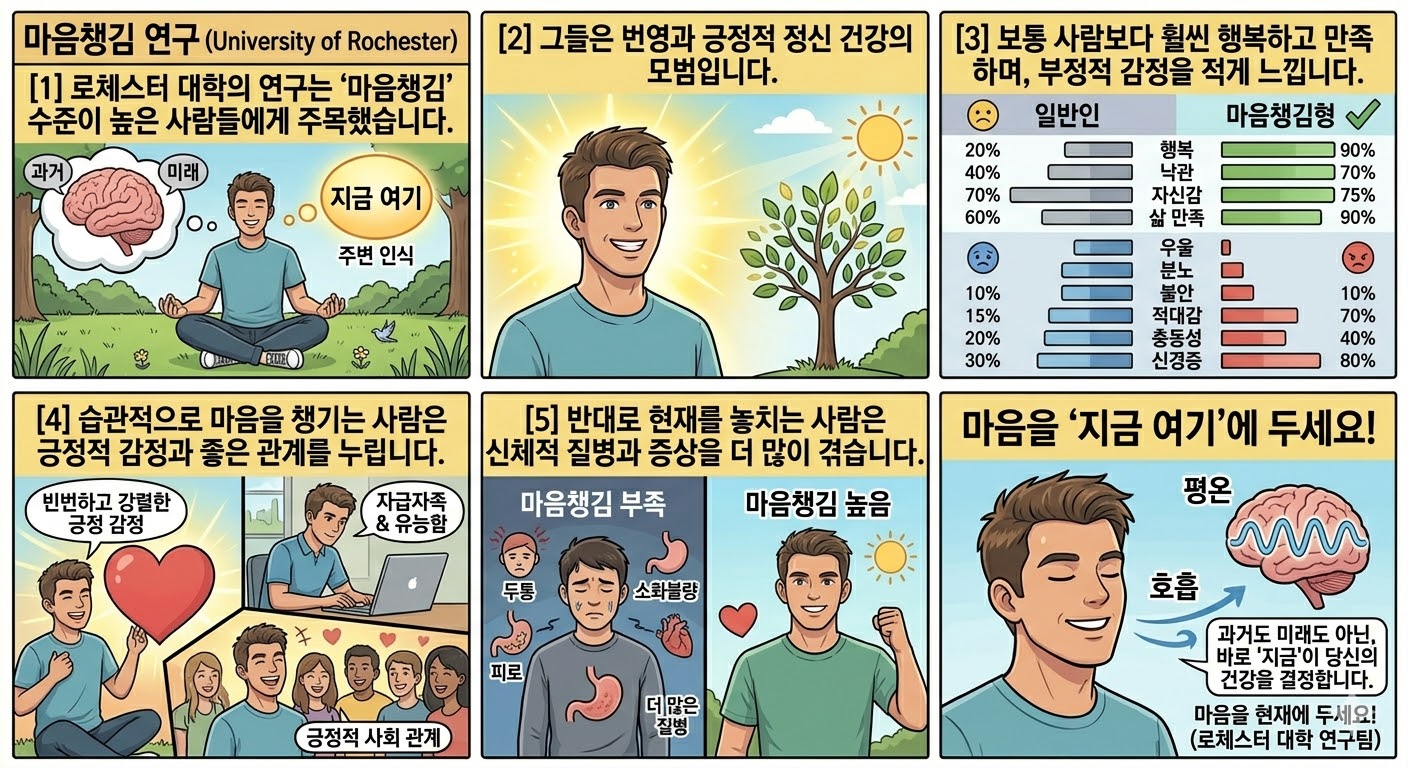
[1] A series of studies conducted at the University of Rochester focused on people high in mindfulness—that is, those who are prone to be mindfully attentive to the here and now and keenly aware of their surroundings.
[2] It turns out that such individuals are models of flourishing and positive mental health.
[3] Relative to the average person, they are more likely to be happy, optimistic, self-confident, and satisfied with their lives and less likely to be depressed, angry, anxious, hostile, self-conscious, impulsive, or neurotic.
[4] Furthermore, people who are habitually mindful of their current experiences are more likely to experience frequent and intense positive emotions, to feel self-sufficient and competent, and to have positive social relationships, while those who are not usually mindful report more illness and physical symptoms.
마음챙김 수준이 높은 사람들에 대한 연구
[1] A series of studies conducted at the University of Rochester focused on people high in mindfulness—that is, those who are prone to be mindfully attentive to the here and now and keenly aware of their surroundings.
정신 건강의 모델이 되는 사람들
[2] It turns out that such individuals are models of flourishing and positive mental health.
평균적인 사람들과의 비교
[3] Relative to the average person, they are more likely to be happy, optimistic, self-confident, and satisfied with their lives and less likely to be depressed, angry, anxious, hostile, self-conscious, impulsive, or neurotic.
마음챙김 유무에 따른 신체적/정신적 차이
[4] Furthermore, people who are habitually mindful of their current experiences are more likely to experience frequent and intense positive emotions, to feel self-sufficient and competent, and to have positive social relationships, while those who are not usually mindful report more illness and physical symptoms.
[내용 연결 & 핵심 키워드 통합 정리]
1단계: 마음챙김의 정의 (The Definition of Mindfulness)
로체스터 대학의 연구는 마음챙김(mindfulness) 수치가 높은 사람들, 즉 '지금 여기(here and now)'에 주의를 기울이고 주변 환경을 **예리하게 인식(keenly aware)**하는 사람들에게 주목했습니다.
2단계: 정신 건강의 표본 (The Positive Mental Health)
연구 결과, 이런 사람들은 **번영(flourishing)**과 긍정적인 정신 건강의 모델임이 밝혀졌습니다. 보통 사람들과 비교했을 때, 이들은 행복감과 낙관주의(optimistic), 자기 확신이 더 높으며, 반대로 우울함, 불안, **적대감(hostile)**과 같은 부정적 감정은 훨씬 적게 느낍니다.
3단계: 사회적 관계와 신체 건강 (Social & Physical Benefits)
습관적으로 마음챙김을 실천하는 사람들은 강렬한 긍정적 정서를 느끼며, 스스로 **유능하다(competent)**고 생각하고 원만한 사회 관계를 유지합니다. 반면, 마음챙김을 하지 않는 사람들은 더 많은 **질병과 신체적 증상(physical symptoms)**을 보고하는 경향이 있습니다.
| 주제 (Topic) | The positive effects of mindfulness on mental and physical well-being 마음챙김이 정신적, 신체적 안녕에 미치는 긍정적 영향 |
쉽게 암기하는 "3단계 공식“ |
| 제목 (Title) | Mindfulness: The Key to a Flourishing Life 마음챙김: 번영하는 삶을 위한 열쇠 |
(정의) Mindfulness = Attention to Here and Now (정신) ↑ Happy / Optimistic ↔ ↓ Depressed / Anxious (신체/사회) ↑ Positive Social Relationships / ↓ Illness |
| 요약 (Summary) | People who are mindfully attentive to their present experiences tend to have better mental health, more positive social relationships, and fewer physical illnesses compared to those who are not. 현재의 경험에 주의를 기울이는 마음챙김을 하는 사람들은 그렇지 않은 사람들에 비해 정신 건강이 더 좋고, 사회적 관계가 긍정적이며, 신체적 질병을 덜 겪는 경향이 있다. |
본문 해석 03
[1] A series of studies (일련의 연구들은) conducted at the University of Rochester (로체스터 대학에서 수행된) focused on people high in mindfulness (마음챙김 수치가 높은 사람들에게 초점을 맞췄다) — that is, those who are prone to be (즉, ~하는 경향이 있는 사람들인) mindfully attentive to the here and now (현재에 마음을 다해 주의를 기울이고) and keenly aware of their surroundings (자신의 주변을 예리하게 인식하는).
로체스터 대학에서 수행된 일련의 연구들은 마음챙김 수치가 높은 사람들, 즉 '현재'에 마음을 다해 주의를 기울이고 주변 환경을 예리하게 인식하는 경향이 있는 사람들에게 초점을 맞췄다.
- those: people high in mindfulness (마음챙김 수치가 높은 사람들)
- 친구 단어 (의미 단위)
- a series of studies: 일련의 연구들
- conducted at: ~에서 수행된
- be high in mindfulness: 마음챙김 수치가 높다
- be prone to: ~하는 경향이 있다
- mindfully attentive to: ~에 주의 깊게 귀를 기울이는
- the here and now: 현재 (지금 여기)
- keenly aware of: ~을 아주 예민하게 인식하는
- 표현 포인트 (해석 포함)
- that is (즉/말하자면): 앞의 people high in mindfulness를 구체적으로 다시 설명해주는 장치입니다. 마음챙김이란 **"현재에 집중하고 주변을 잘 살피는 것"**임을 정의합니다.
[2] It turns out that (라고 밝혀졌다) such individuals are models (그러한 개인들이 모델/본보기라는 것이) of flourishing and positive mental health (번영하고 긍정적인 정신 건강의).
그러한 개인들이 번영하고 긍정적인 정신 건강의 본보기라는 사실이 밝혀졌다.
- such individuals: people high in mindfulness (마음챙김 수치가 높은 사람들)
- 친구 단어 (의미 단위)
- it turns out that: ~임이 드러나다(판명되다)
- models of flourishing: 번창(성공)의 모델
- positive mental health: 긍정적인 정신 건강
- 표현 포인트 (해석 포함)
- flourishing (번창하는/활기찬): 여기서는 정신적으로 매우 건강하고 활기찬 상태를 뜻하며, 마음챙김의 결과론적인 장점을 한 단어로 압축해 보여줍니다.
[3] Relative to the average person (일반적인 사람과 비교하여), they are more likely to be (그들은 ~할 가능성이 더 높다) happy, optimistic, self-confident, and satisfied with their lives (행복하고, 낙천적이고, 자신감이 있고, 자신의 삶에 만족할) and less likely to be (그리고 ~할 가능성은 더 낮다) depressed, angry, anxious, hostile, self-conscious, impulsive, or neurotic (우울하거나, 화가 나거나, 불안하거나, 적대적이거나, 남의 눈을 의식하거나, 충동적이거나, 신경과민일).
일반적인 사람들에 비해, 그들은 행복하고, 낙천적이고, 자신감이 있고, 자신의 삶에 만족할 가능성이 더 높은 반면, 우울하거나, 화가 나거나, 불안하거나, 적대적이거나, 남의 눈을 의식하거나, 충동적이거나, 신경과민일 가능성은 더 낮다.
- they / their: such individuals (마음챙김 수치가 높은 사람들)
- 친구 단어 (의미 단위)
- relative to: ~와 비교하여
- average person: 평균적인 사람(일반인)
- be more likely to V: ~할 가능성이 더 높다
- be less likely to V: ~할 가능성이 더 낮다
- satisfied with their lives: 그들의 삶에 만족하는
- 표현 포인트 (해석 포함)
- more likely to (A) and less likely to (B): 상관관계를 대조적으로 보여줍니다. 마음챙김이 "긍정적 감정은 높이고(more), 부정적 감정은 낮추는(less)" 역할을 한다는 것을 증명합니다.
[4] Furthermore (더욱이), people who are habitually mindful (습관적으로 마음챙김을 하는 사람들은) of their current experiences (자신의 현재 경험에 대해) are more likely to experience (경험할 가능성이 더 높다) frequent and intense positive emotions (번번하고 강렬한 긍정적 감정을), to feel self-sufficient and competent (자급자족하고 유능하다고 느낄), and to have positive social relationships (그리고 긍정적인 사회적 관계를 가질)
[5] while those who are not usually mindful (반면에 보통 마음챙김을 하지 않는 사람들은) report more illness and physical symptoms (더 많은 질병과 신체적 증상을 보고한다).
더욱이, 자신의 현재 경험에 대해 습관적으로 마음챙김을 하는 사람들은 빈번하고 강렬한 긍정적 감정을 경험하고, 스스로 충족감과 유능함을 느끼며, 긍정적인 사회적 관계를 맺을 가능성이 더 높다.
- their: people who are habitually mindful (습관적으로 마음챙김을 하는 사람들)
- 친구 단어 (의미 단위)
- habitually mindful of: 습관적으로 ~에 마음을 쓰는
- current experiences: 현재의 경험들
- intense positive emotions: 강렬한 긍정적 감정들
- feel self-sufficient and competent: 스스로 충분하고 유능하다고 느끼다
- positive social relationships: 긍정적인 사회 관계
- physical symptoms: 신체적 증상(통증 등)
- 반면에 보통 마음챙김을 하지 않는 사람들은 더 많은 질병과 신체적 증상을 보이는 것으로 나타난다.
- those: people who are not usually mindful (마음챙김을 잘 하지 않는 사람들)
- 표현 포인트 (해석 포함)
- while (반면에): 마음챙김을 잘하는 집단과 그렇지 못한 집단의 **"건강 상태 대조"**를 극명하게 보여줍니다. 특히 마음챙김이 부족하면 정신뿐만 아니라 **신체적 질병(illness)**으로도 이어질 수 있음을 강조합니다.
'고1 > ebs 리딩파워 유형편 기본' 카테고리의 다른 글
| ebs 리딩파워 유형편 unit 02 - EXAMPLE (0) | 2026.03.12 |
|---|---|
| ebs 리딩파워 유형편 unit 01 - 04 (1) | 2026.03.11 |
| ebs 리딩파워 유형편 unit 01 - 02 (0) | 2026.03.11 |
| ebs 리딩파워 유형편 unit 01 - 01 (0) | 2026.03.11 |
| ebs 리딩파워 유형편 unit 1 주제 제목 example 2016년 6월 22번 (1) | 2026.03.09 |